

Has your baby entered the dreaded teething stage? Don’t panic, there’s no need to send out an SOS. We’re here to help by answering 10 of the most common teething questions. From how long teething actually lasts to whether or not it can cause a fever. So, buckle up, give your baby a teething toy (and say hello to two minutes of peace) and let’s dive in.
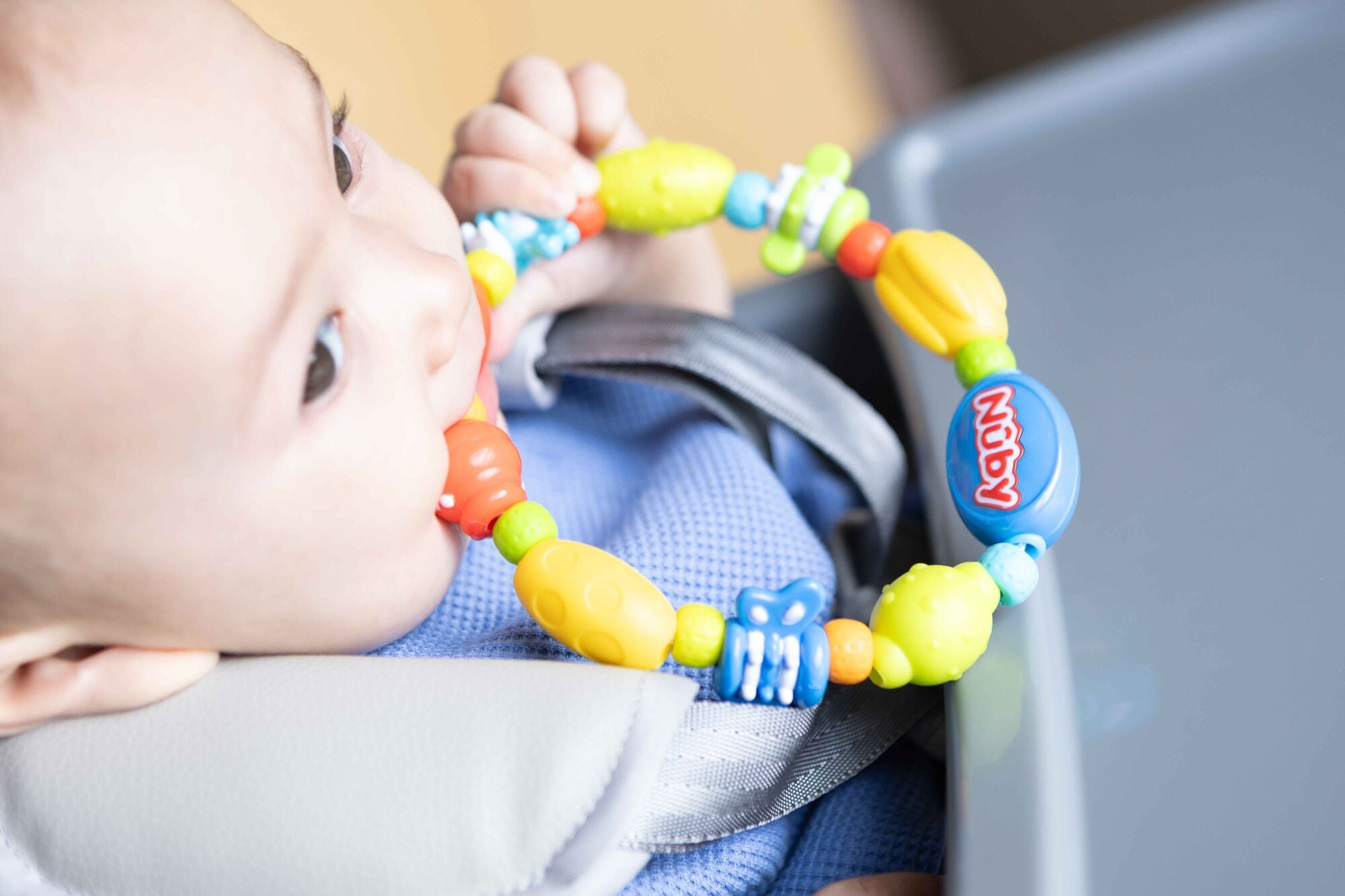
1. When do babies start teething?
Most babies start teething at around six months old. But did you know some babies are actually born with teeth? And others don’t start until they’re as old as 12 months or as early as four months old. Every baby’s timeline is different, so don’t stress.
2. How long does teething last?
Brace yourself, teething isn’t exactly a blink and you’ll miss it phase. Most children will get their full set of milk teeth between the ages of two and three. That’s a lot of gnawing and dribbling ahead but we’ve got your back.
3. Can teething cause a fever?
If you’re wondering this, you’re not alone; in fact, it’s Googled on average 1.6k times a month in the UK. The short answer? No, teething shouldn’t cause a proper fever. According to the NHS, teething may cause a mild temperature (under 38°C), but anything higher likely means something else is going on. So, if your baby’s running a high temperature, it’s worth checking in with your GP.
4. Can teething cause diarrhoea?
This one's a classic parenting myth. While you may have heard from friends or family that teething causes diarrhoea, there’s no scientific evidence to back it up. So, no, teething isn’t the culprit here. Phew.
5. Can teething cause vomiting?
Another old wives’ tale, we’re afraid. There’s no solid evidence to suggest teething causes vomiting. If your baby has symptoms like vomiting or diarrhoea, treat it as you normally would and if you’re worried, give your GP a call.
6. How to help a teething baby?
So, your baby’s teething, and you’re wondering what on earth to do? Deep breath, you’ve got this.
Baby teethers are your new best friends. Here are our top picks:
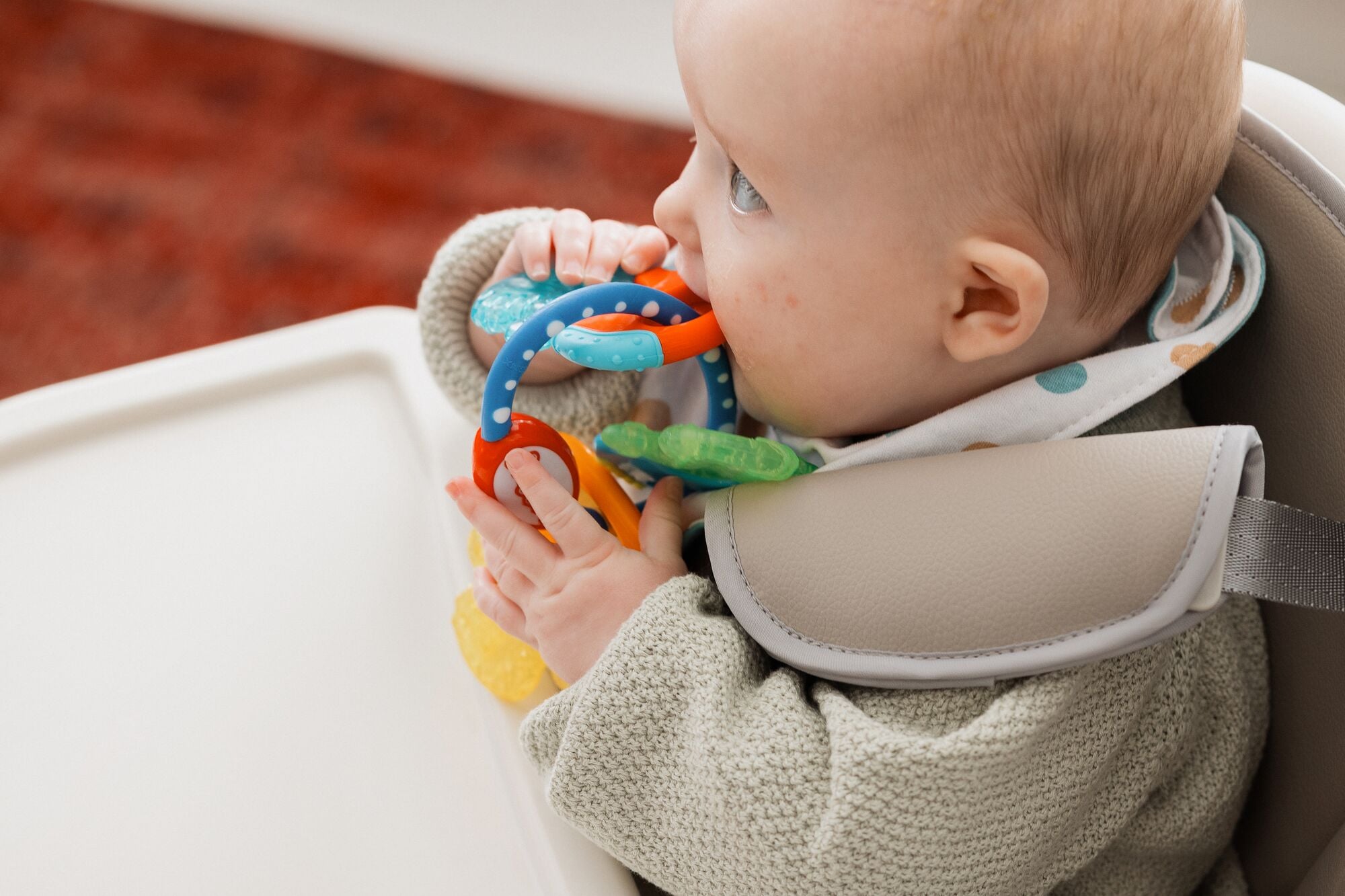
Made with PureIce™ gel tech, these clever little keys provide a cooling effect for sore gums. Pop them in the fridge for extra chill power.
Wrist Pal Silicone Teething Mitt
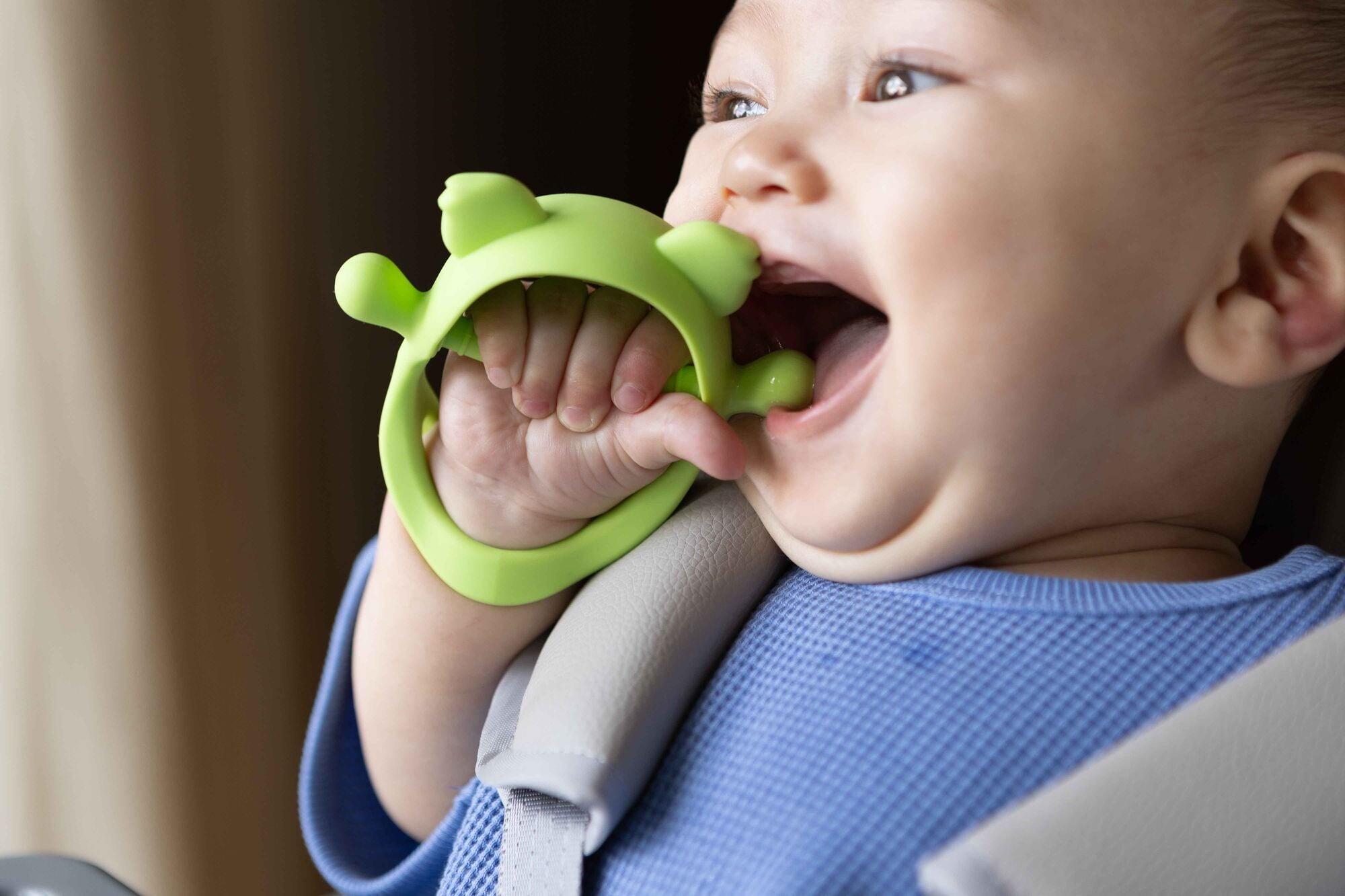
Babies love dropping (or throwing…) things. This mitt fits securely on their hands so no more accidental or on-purpose dropping of teethers... Plus, it stops them from chewing their hands. Genius.
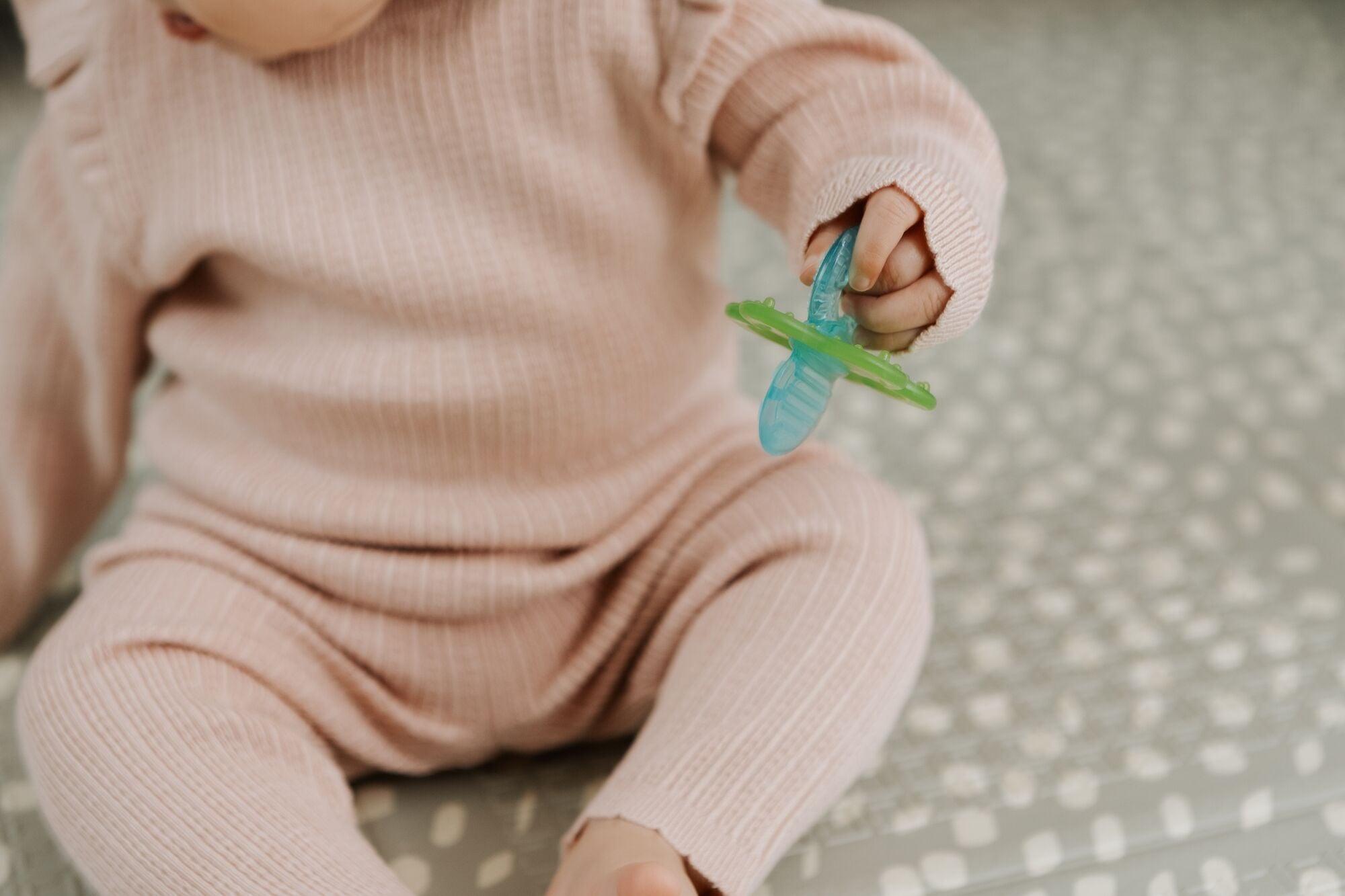
Perfect for early teethers (from 3 months+), these soft silicone wonders have textured ridges and gentle bristles that soothe sore gums and encourage toothy progress.
If your baby is six months or older, you can also offer healthy things to chew on, just always supervise. Here are a few tasty options:
- Carrot sticks
- Cucumber
- Melon
- Avocado
Still not helping? If your baby is really uncomfortable, the NHS recommends sugar-free pain relief like paracetamol or ibuprofen (from 3 months+).
7. Do babies sleep more when teething?
Sadly, no. Teething doesn’t make babies sleep more; in fact, it’s often the opposite. Sore gums can mess with their usual routine, making it harder for them to settle and causing disruption to their usual sleep pattern
8. How to know if a baby is teething?
So, you’re unsure if your baby is teething. We’ve shared a list of common symptoms below to watch out for:
- As mentioned above, disrupted sleep
- A mild temperature of 38°C or less but not a fever
- A classic one: sore, red gums where teeth are trying to pop through
- A flushed cheek or rash on their face (but always get rashes checked if you’re unsure)
- Dribbling galore: we’re talking way more than usual
- Rubbing their ear
- Chewing and gnawing on literally everything
9. What do teething gums look like?
Teething gums usually look red, swollen and a bit puffy around the area where a tooth is pushing through. You might even spot tiny white tooth buds. Keep in mind that teeth pop up in stages, so it won’t all happen at once.
10. How to soothe a teething baby at night?
If only there were a magic wand to wave for this one. Until then, here are a few tried and tested tricks:
- Comfort them with cuddles, lullabies or whatever helps them wind down
- Wipe away dribble regularly with a soft muslin to avoid teething rashes
- Offer a teething toy but only while they’re awake and supervised
- If needed, give them a dose of infant paracetamol or ibuprofen to ease the discomfort
Teething can be a challenge, but you don’t have to face it empty handed. Explore our full range of baby teethers and find the perfect one to help soothe your baby’s or toddler’s sore gums.